Panama City Beach Water Quality: What Every Homeowner and Vacation Rental Owner Should Know
From seasonal tourism surges to Gulf-front corrosion, Panama City Beach homeowners face unique water challenges. Here's what the data shows — and what to do about it.
Panama City Beach is one of Florida's most visited destinations — and one of its most unique water challenges. With a population that swells from 12,000 year-round residents to over 8 million annual visitors, the Bay County water system faces extraordinary seasonal demand. Add Gulf-front humidity, aging vacation rental plumbing, and the same Floridan Aquifer hardness issues that affect the rest of the Panhandle, and you have a water quality picture that every homeowner and rental property owner needs to understand.
Where Panama City Beach Water Comes From
Panama City Beach is served by the Bay County Utilities system, which draws from a combination of groundwater wells tapping the Floridan Aquifer and surface water from Deer Point Lake Reservoir. The reservoir source adds a layer of complexity — surface water is more susceptible to seasonal variation, agricultural runoff, and algal bloom events than pure groundwater sources.
The Bay County system treats water with chloramine (a combination of chlorine and ammonia) for disinfection. While effective at killing pathogens, chloramine is more difficult to remove than free chlorine and requires catalytic carbon filtration rather than standard activated carbon.
The Hard Water Reality
Bay County water consistently tests in the moderately hard to hard range — 8 to 14 grains per gallon (GPG). For context, the U.S. Geological Survey classifies anything above 7 GPG as hard. This level of hardness:
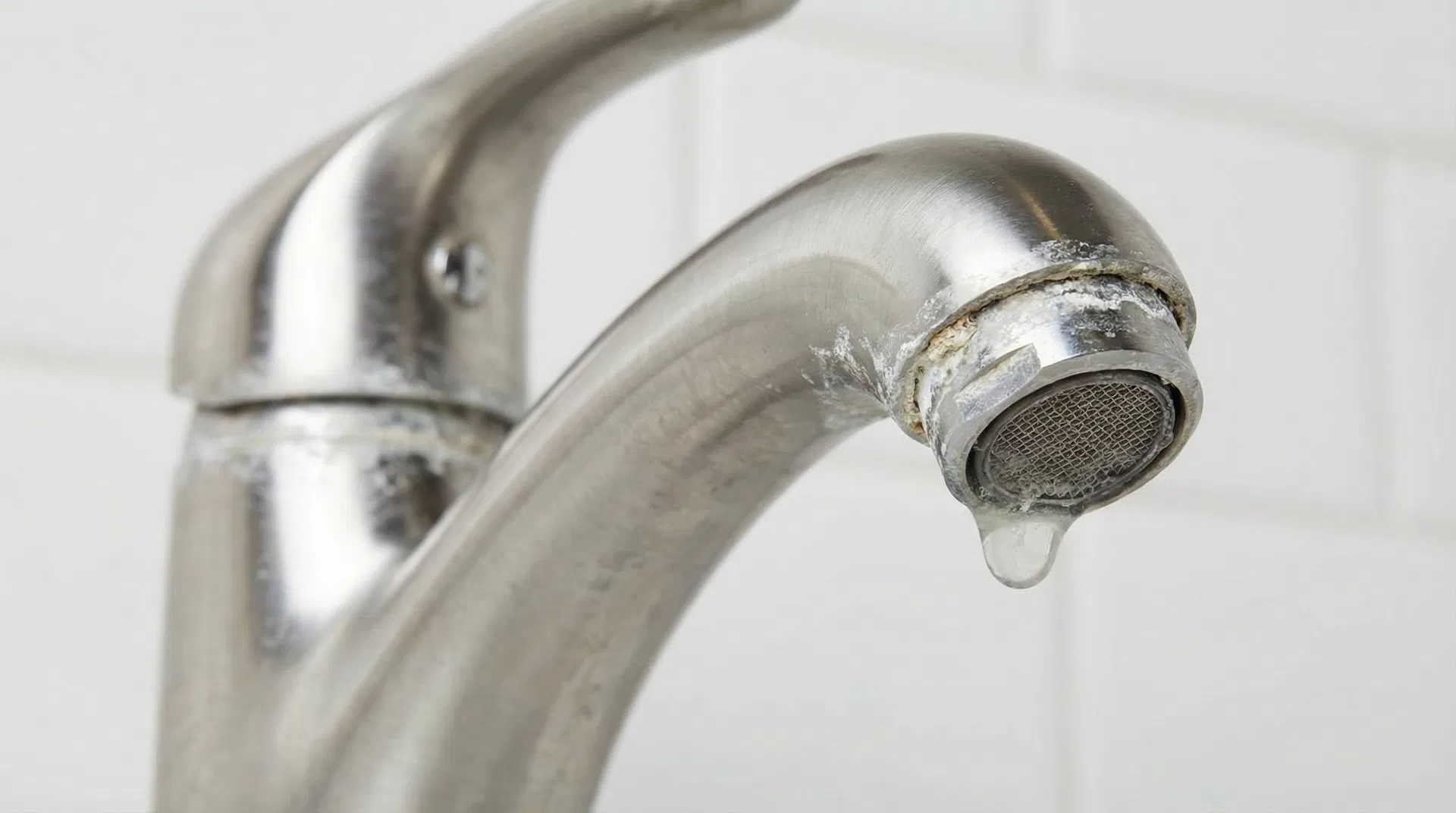
- Leaves white scale deposits on shower tiles, faucets, and glass
- Reduces the efficiency of water heaters by up to 29% over time
- Shortens the lifespan of dishwashers, washing machines, and ice makers
- Causes soap and shampoo to lather less effectively
- Leaves a filmy residue on skin and hair
For vacation rental owners, hard water scale is a constant maintenance burden — it dulls fixtures, stains grout, and creates the kind of visible buildup that earns negative guest reviews.
If you own a vacation rental in Panama City Beach, hard water scale on shower glass and faucets is one of the top complaints in guest reviews. A salt-free water conditioner prevents new scale from forming without adding sodium to the water — ideal for rentals where you can't monitor a salt tank.
The Seasonal Surge Problem
Panama City Beach's water system is designed for peak summer capacity — but that means during the off-season, water sits longer in distribution pipes, increasing the likelihood of taste and odor issues. Conversely, during peak season (Memorial Day through Labor Day), the system operates at maximum capacity, which can affect treatment consistency.
Homeowners who live year-round often notice the water tastes and smells different in January than it does in July. This variability is a direct result of the seasonal demand cycle and is one reason whole-home point-of-entry filtration is particularly valuable in PCB.
Gulf-Front Corrosion and Plumbing Concerns
Properties within a few blocks of the Gulf face an additional challenge: salt air corrosion. While this primarily affects exterior fixtures and HVAC equipment, it can also accelerate corrosion inside plumbing systems — particularly in older vacation rental properties with copper or galvanized steel pipes. Corroding pipes can leach copper, iron, or other metals into the water supply, creating taste issues and potential health concerns.
A whole-home filtration system with a sediment pre-filter addresses this by capturing particulates before they reach faucets, appliances, and ice makers.
D'Pure's Recommendation for Panama City Beach Properties
After testing hundreds of Bay County homes and vacation rentals, D'Pure specialists typically recommend:
For primary residences:
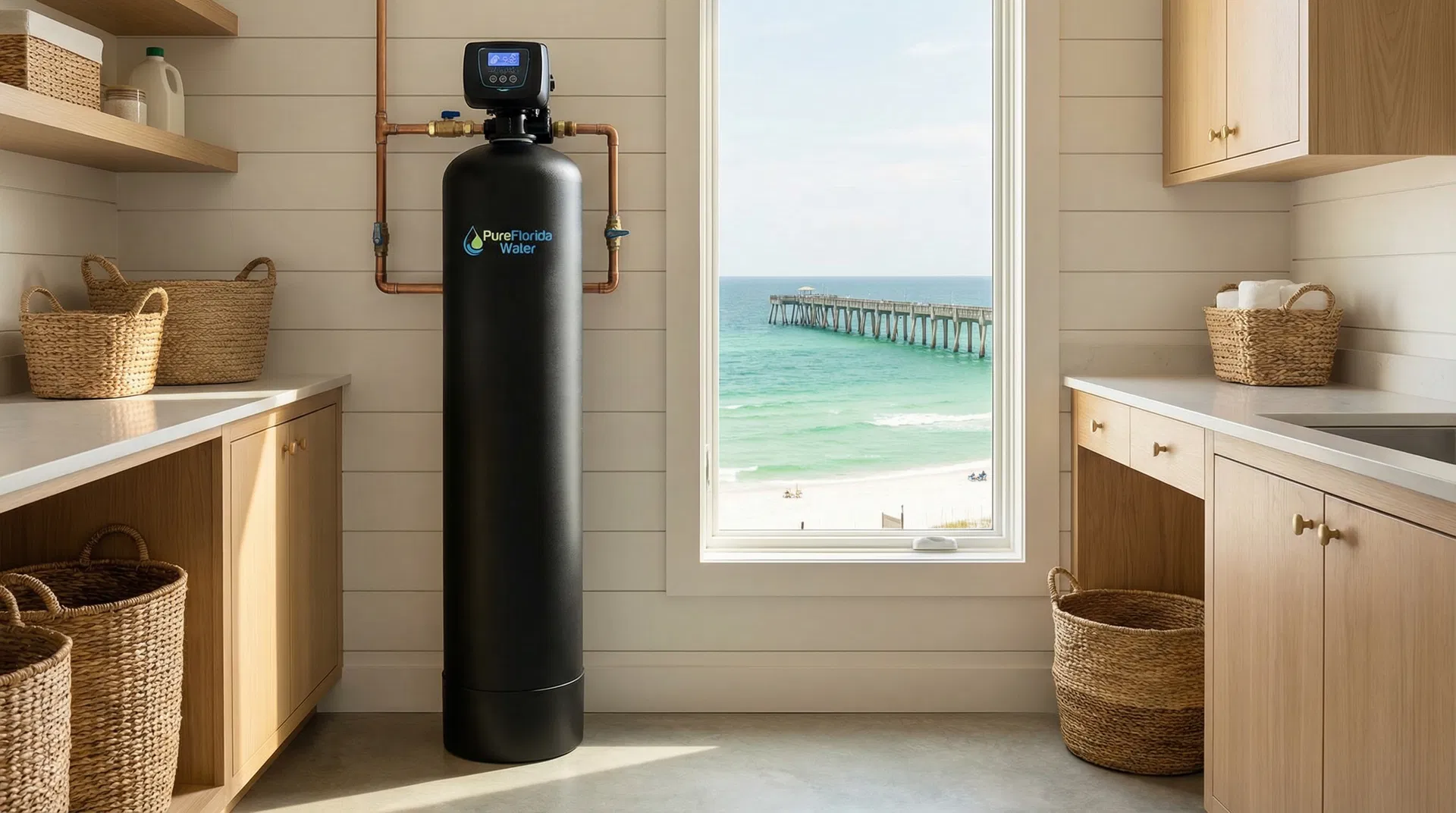
Stage 1 — Whole-Home Carbon Filtration: A catalytic carbon whole-home filter (WRF-150 or WRF-400) removes chloramine, DBPs, taste, and odor at the point of entry.
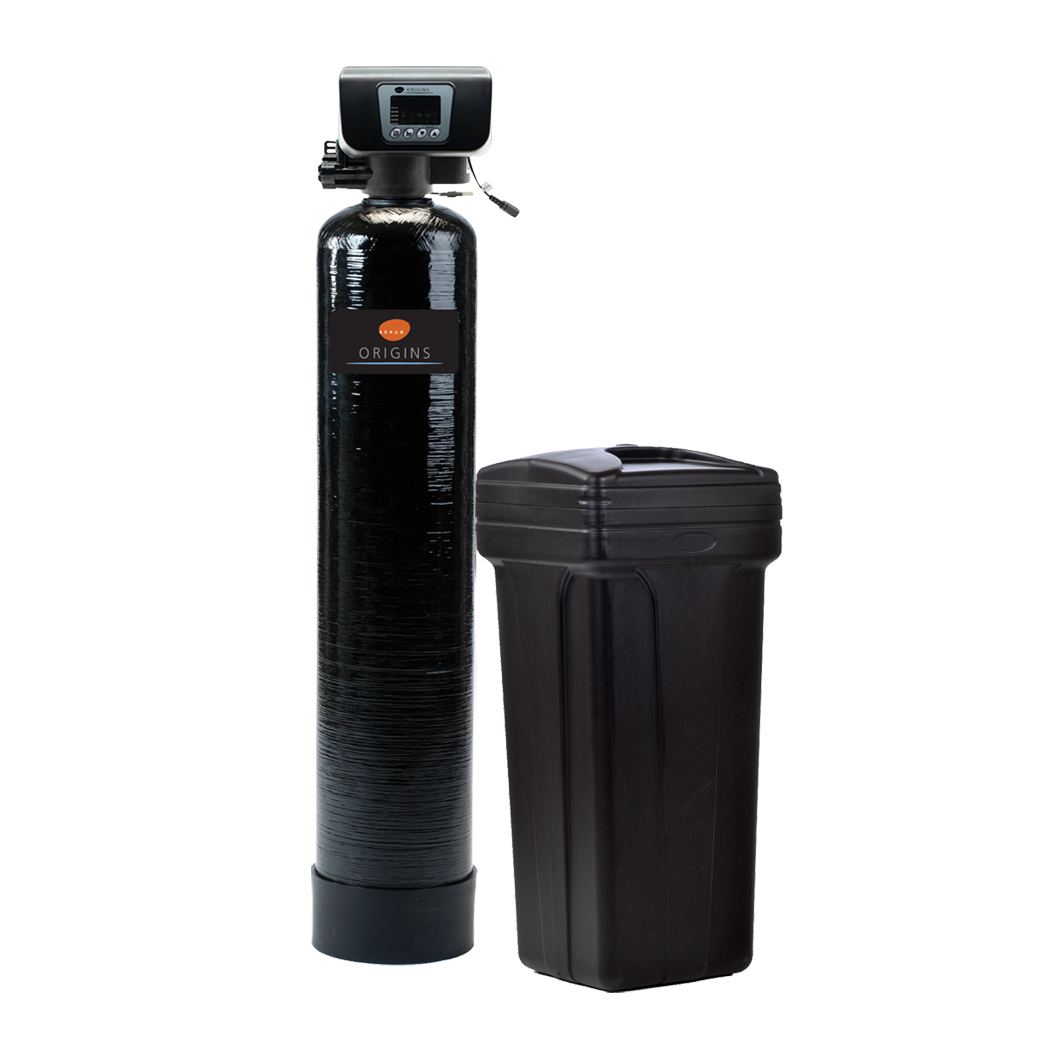
Stage 2 — Water Conditioning: A salt-free conditioner (WC200) or ion-exchange softener addresses hardness without adding sodium — protecting appliances and improving water feel throughout the home.
For vacation rental properties:
A salt-free conditioner is the preferred choice — it requires no salt replenishment, no programming, and no maintenance between guest stays, while still preventing scale buildup on fixtures and appliances.
Optional — UV Disinfection: For properties near Deer Point Lake or with older plumbing, a UV-Pro whole-home system adds a final layer of protection against any microbial contaminants that may pass through during high-demand periods.
Start with a Free Water Test
Every property in Panama City Beach has a unique water profile depending on its location, plumbing age, and proximity to the Gulf. The only way to know exactly what's in your water is to test it.
D'Pure provides free in-home water testing with a full written report — no sales pressure, no commitment. Our specialists will walk you through your results and recommend only what your specific water chemistry requires.
Call D'Pure at 800-693-4102 or visit our Panama City Beach service area page to schedule your free in-home water test today.
For neighboring Panhandle communities, read about Fort Walton Beach water quality in Okaloosa County. If Gulf-front humidity has you concerned about indoor air, our guide on mold in Florida homes and air quality testing explains what to look for and when to call a certified inspector.
Because in Panama City Beach, your water should be as clear as the Gulf.
Ready to Take Action?
D'Pure offers free in-home water testing and air quality assessments with no obligation. Our certified specialists will give you honest answers about what's in your water and air.