Pensacola Water Quality: What Every Homeowner Needs to Know
Pensacola draws from the Perdido River — a surface water source with its own set of treatment challenges. Here's what's in your water and how to protect your home.
Pensacola Water Quality: What Every Homeowner Needs to Know
Pensacola is one of the most historically rich cities in the Florida Panhandle — but its water supply tells a story that many residents don't know. Unlike most of the Florida Panhandle, which draws from deep limestone aquifers, Pensacola and Escambia County rely primarily on surface water from the Perdido River and Perdido Bay. That single difference shapes every water quality challenge you may be experiencing in your home.
Where Pensacola's Water Comes From
The Emerald Coast Utilities Authority (ECUA) treats water drawn from the Perdido River system before distributing it to homes across Pensacola, Pensacola Beach, and surrounding communities. Surface water treatment is more complex than groundwater treatment — it requires higher levels of disinfection chemicals to address seasonal fluctuations in turbidity, organic matter, and microbial content.
The result: Pensacola's treated tap water is generally safe by EPA standards, but it often carries detectable levels of chloramines (a chlorine-ammonia compound used as a secondary disinfectant), disinfection byproducts (DBPs), and total trihalomethanes (TTHMs) — compounds that form when chlorine reacts with naturally occurring organic matter in surface water.
What's Actually in Pensacola Tap Water?
ECUA publishes an annual Consumer Confidence Report (CCR) that details what's in the water supply. Key findings that homeowners should understand:
Disinfection Byproducts: TTHMs and haloacetic acids (HAAs) are consistently detected in Pensacola's water. While levels typically fall within EPA legal limits, long-term exposure to elevated DBPs has been associated with health concerns in peer-reviewed research. Families with infants, pregnant women, or immunocompromised members may want additional protection.
Chloramine Taste and Odor: Many Pensacola residents describe their tap water as having a faint chemical or "pool-like" smell. This is chloramine — effective at disinfection, but unpleasant to drink and potentially irritating to skin and eyes during bathing.
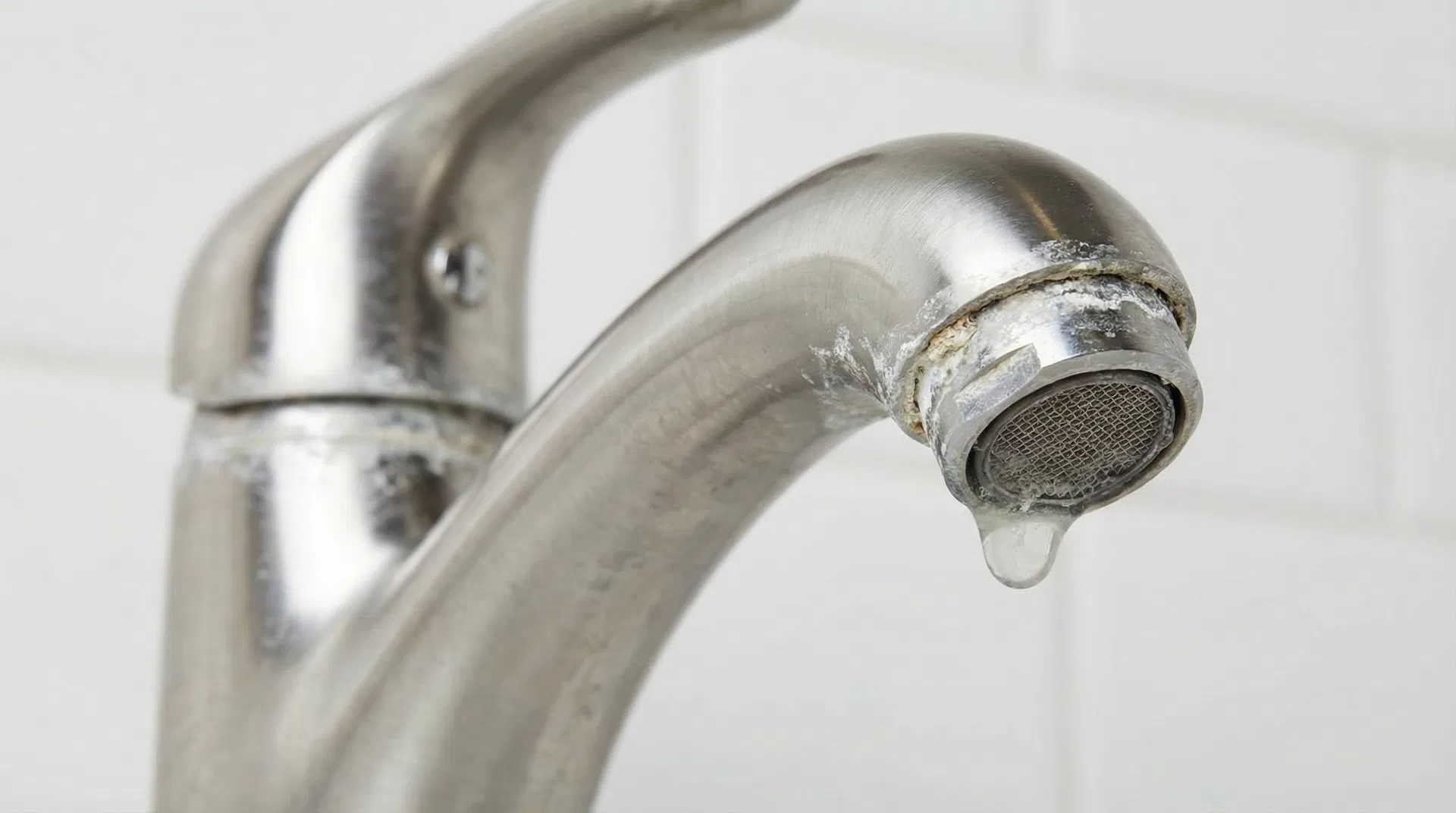
Moderate Hardness: Pensacola's surface water is softer than the deep aquifer water found in Fort Walton Beach, typically ranging from 4 to 8 grains per gallon (GPG). While not as scale-forming as harder water, it can still cause spotting on fixtures and reduce soap lathering efficiency.
Seasonal Variability: Surface water quality fluctuates with rainfall, runoff, and seasonal algae blooms. Heavy rain events can temporarily increase turbidity and organic load in the source water, which ECUA addresses with additional treatment — but which can affect taste and odor at the tap.
The Pensacola-Specific Challenge: Chloramine Removal
Chlorine is relatively easy to remove with standard carbon filtration. Chloramine is not. It requires a specialized catalytic carbon filter or a combination of carbon filtration with a contact time long enough to break the chloramine bond. Many standard pitcher filters and basic under-sink systems are not rated for chloramine removal.
This is why D'Pure's Pensacola customers frequently report that even after installing a basic filter, they still notice taste and odor issues. The solution requires the right media — and that's where a professional water assessment makes all the difference.
How Hard Water Affects Your Home
Even at 4–8 GPG, Pensacola's water hardness is enough to:
- Leave white spots on dishes, glassware, and shower doors
- Reduce the efficiency of water heaters and dishwashers over time
- Cause soap and shampoo to lather less effectively
- Leave a filmy residue on skin and hair after bathing
For homeowners with newer appliances or high-end plumbing fixtures, even moderate hardness can shorten equipment life and increase maintenance costs.
D'Pure's Recommendation for Pensacola Homes
After testing hundreds of Pensacola-area homes, D'Pure's water specialists typically recommend a two-stage whole-home approach:
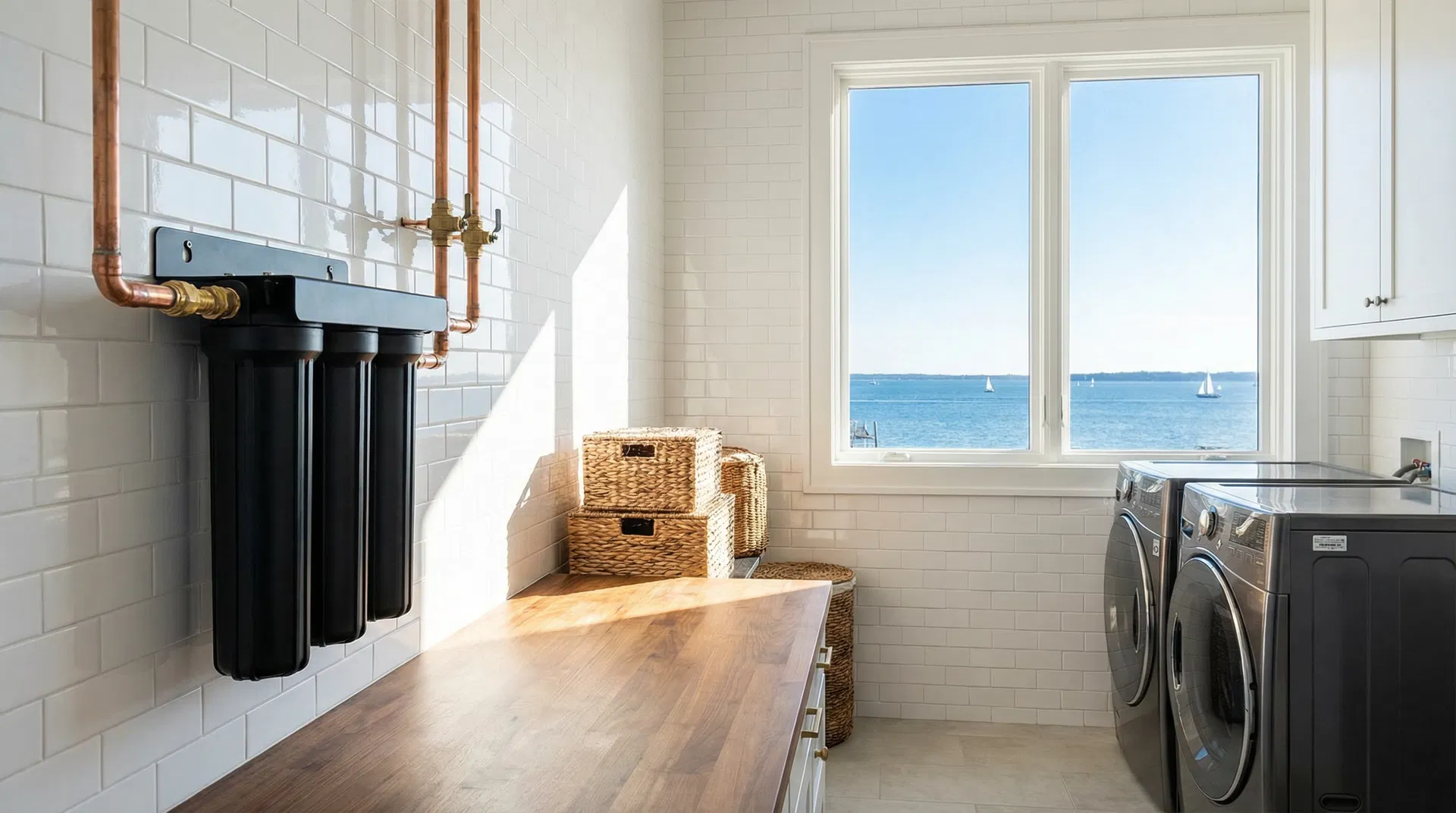
Stage 1 — Whole-Home Filtration: A catalytic carbon-based whole-home filter (such as the Air Excellence WRF-150 or WRF-400) addresses chloramine, DBPs, taste, and odor at the point of entry — before water reaches any faucet, shower, or appliance in the home.
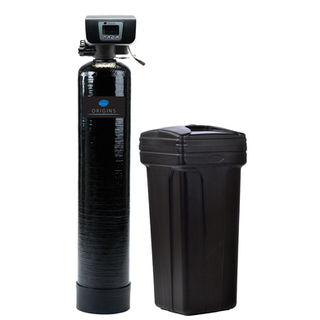
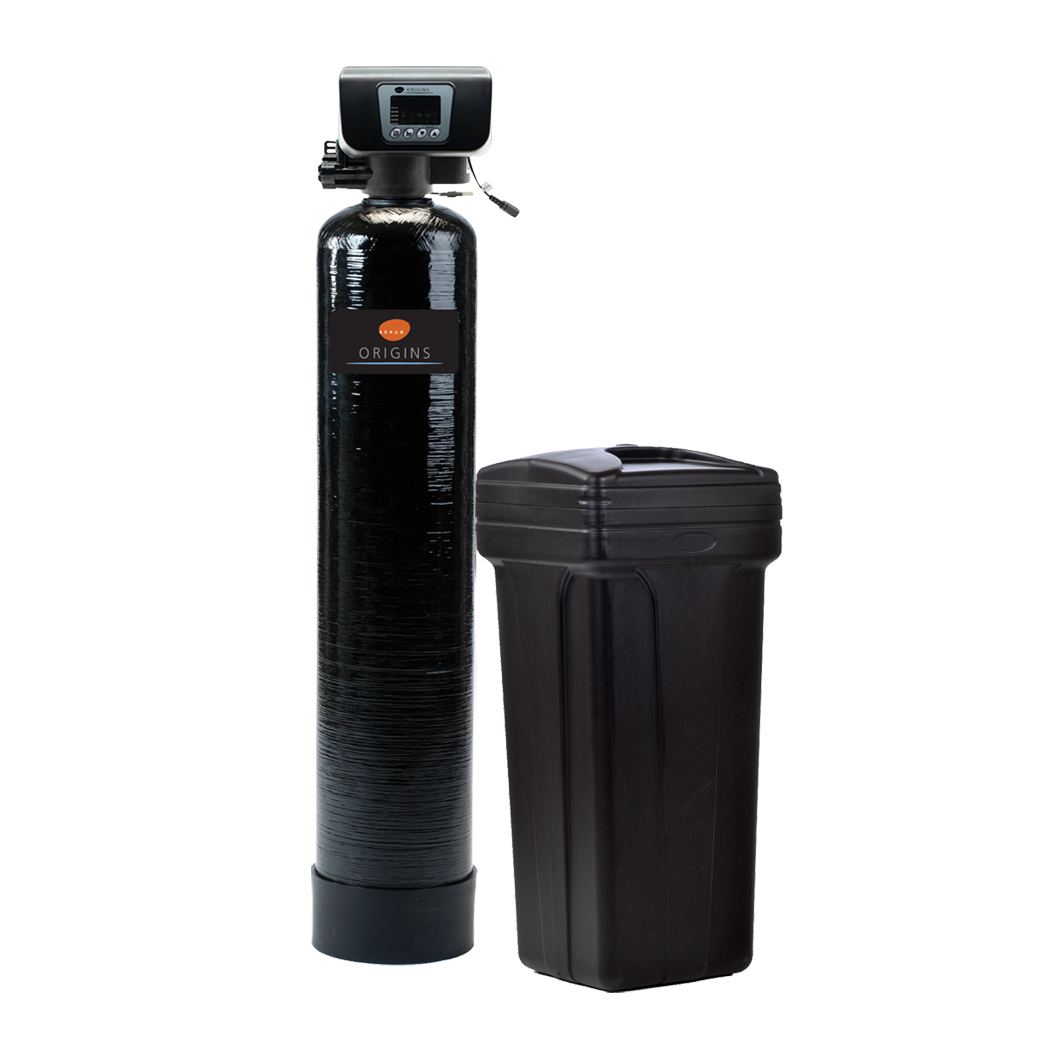
Stage 2 — Water Conditioning or Softening: A whole-home conditioner or softener addresses the moderate hardness, protecting appliances and improving the feel of water throughout the house.
Optional Stage 3 — UV Disinfection: For households near the Perdido River basin or in areas with older infrastructure, a UV-Pro whole-home disinfection system adds an additional layer of protection against microbial contaminants that may pass through the treatment process during high-rainfall events.
Pensacola's surface water source means seasonal variability — water quality can shift noticeably after heavy rain events. A whole-home catalytic carbon filter provides consistent protection year-round regardless of what's happening upstream.
The Military Family Consideration
Pensacola is home to NAS Pensacola and a large active-duty and veteran community. Military families who have lived in multiple locations often notice water quality differences immediately when relocating to Pensacola — particularly the chloramine taste and the seasonal variability. D'Pure has extensive experience serving military families in the Pensacola area and offers flexible scheduling to accommodate deployments and PCS moves.
Start with a Free Water Test
The only way to know exactly what's in your Pensacola home's water is to test it. D'Pure provides free in-home water testing with a full written report — no sales pressure, no commitment. Our specialists will walk you through your results and recommend only what your specific water chemistry requires.
Call D'Pure at 800-693-4102 or visit our Pensacola service area page to schedule your free in-home water test today.
For more Florida Panhandle water quality guides, read about Panama City Beach water quality to the east, or Fort Walton Beach water quality in Okaloosa County.
Because in Pensacola, what's in your water matters as much as what's in your bay.
Ready to Take Action?
D'Pure offers free in-home water testing and air quality assessments with no obligation. Our certified specialists will give you honest answers about what's in your water and air.